Northern Lights: Understanding the Fascinating Aurora Borealis Phenomenon
4/1/2025
Discover everything about the Northern Lights: scientific explanation, where and when to see the aurora borealis, practical tips, and secrets behind this unique natural phenomenon in the Arctic.
Introduction: The Northern Lights, a Unique Natural Spectacle
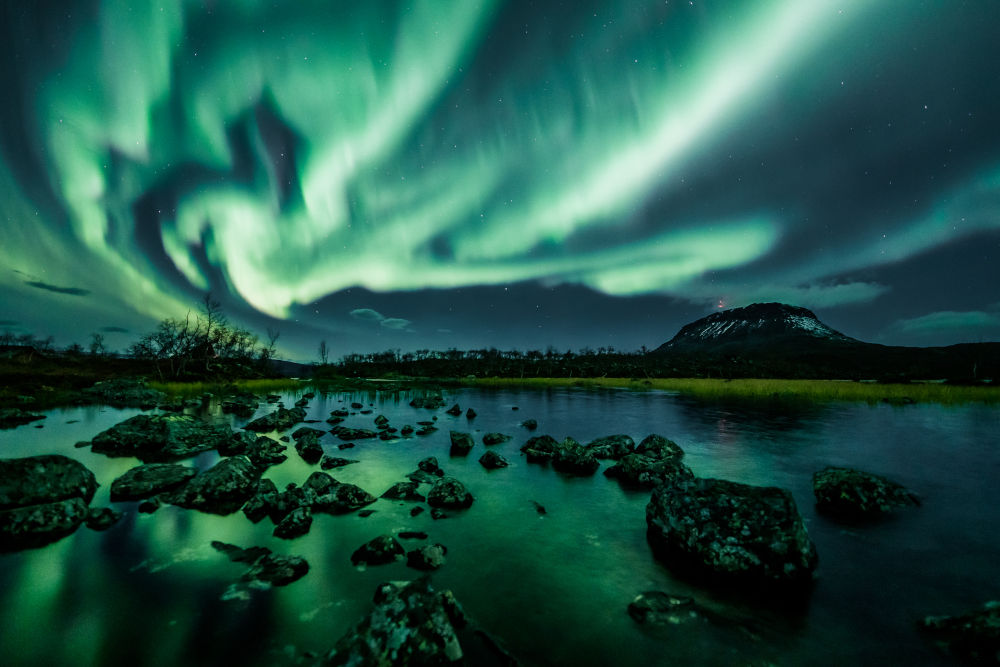
The Northern Lights, also known as aurora borealis or polar lights, are among the most breathtaking natural phenomena on Earth. These glowing curtains of light—often green but sometimes red, purple, or blue—dance across polar night skies and have fascinated humanity for centuries.
At O‑Nord, we invite you to explore the magic behind this extraordinary display: how the Northern Lights are formed, where and when to see them, and why they attract thousands of travelers to the Arctic every year.
What Are the Northern Lights?
The Northern Lights are a natural atmospheric light phenomenon that occurs mainly in the Northern Hemisphere, close to Earth’s magnetic poles.
They appear as moving curtains, arcs, or waves of light in the sky. Green is the most common color, but other shades may appear depending on conditions.
In the Southern Hemisphere, the same phenomenon is called the aurora australis.
How Are the Northern Lights Formed?
1. The Role of the Sun
Everything starts with the Sun. It constantly releases charged particles—electrons and protons—known as the solar wind.
When solar activity increases (solar flares or storms), these particles are ejected into space at high speed.
2. Earth’s Magnetic Field
Earth is protected by a magnetic shield called the magnetosphere, which deflects most solar particles.
However, some particles are guided along magnetic field lines toward the poles, where they enter the atmosphere.
3. Collision with the Atmosphere
When these particles collide with gases in the atmosphere (mainly oxygen and nitrogen), they release energy.
➡️ The result: this energy is emitted as light—creating the stunning aurora borealis.
4. Why Do Auroras Have Different Colors?
The colors depend on the gas and altitude:
- Green: oxygen (most common)
- Red: oxygen at higher altitudes
- Blue / purple: nitrogen
Where to See the Northern Lights
Auroras are most visible in a region called the auroral oval, located around the magnetic poles.
Best destinations to see the Northern Lights
- 🇳🇴 Norway (Tromsø, Lofoten, Alta)
- 🇮🇸 Iceland
- 🇫🇮 Finland
- 🇸🇪 Sweden
- 🇨🇦 Canada (Yukon, Northern Quebec)
Norway—especially Tromsø—is one of the most popular places to witness this phenomenon.
When to See the Northern Lights
🌙 Best season
Auroras are visible when nights are dark enough.
👉 Best time: October to March
In Iceland, for example, the viewing season can extend from August to April depending on conditions.
⚡ Solar activity matters
Aurora intensity depends on the solar cycle, which lasts approximately 8 to 13 years.
During high solar activity periods, auroras are:
- more frequent
- more intense
- visible at lower latitudes (sometimes even in France)
Ideal Conditions to See the Northern Lights
To maximize your chances:
✅ Clear skies
✅ Low light pollution
✅ Little or no moonlight
✅ High KP index (geomagnetic activity)
Why Are the Northern Lights So Fascinating?
The Northern Lights are not just a scientific phenomenon—they are also deeply rooted in culture:
- ancient myths of dragons or spirits
- Nordic and Inuit legends
- symbols of mystery and magic
Even today, they continue to captivate travelers, photographers, and nature lovers worldwide.
The O‑Nord Experience: Discover the Aurora Borealis Differently
At O‑Nord, we believe that seeing the Northern Lights is more than just watching a phenomenon:
- 👉 it’s an immersive Arctic experience
- 👉 a moment suspended between science and magic
- 👉 an unforgettable memory
Whether in Norway, Iceland, or Finland, each destination offers a unique atmosphere to experience the aurora borealis.
Conclusion: A Natural Phenomenon Between Science and Magic
The Northern Lights are the result of a subtle interaction between the Sun and Earth. Behind their hypnotic beauty lies a fascinating scientific process involving particles, magnetic fields, and atmospheric gases.
But beyond science, they remain a powerful emotional experience, capable of leaving a lasting impression for a lifetime.
Stay in the amazing glass igloos of Levi
Nothern Lights Getaway in the Lofoten
The riches of the South Icelandic Coast
Magical Northern Lights on Top of the World
Tailor-made discovery in Lapland
Tailor-made discovery in Iceland
tags: Aurora North O-Nord Tailor-made Tour operator Travels Winter